Harbin Central Street (Zhongyang Dajie) is the city's most iconic landmark—a 1,450-meter cobblestone pedestrian avenue that stretches from the Flood Control Monument on the Songhua River to Jingwei Street in the south. Built in 1898 by Russian constructors during the city's semi-colonial period and originally called "Chinese Street," it gained its present name in the late 1920s and was designated China's first commercial pedestrian street in 1997. Today, it is celebrated as the longest and best-preserved European-style pedestrian street in Asia.
The street's most distinctive feature is its surface, paved in 1924 with 870,000 square granite blocks known locally as "bread stones" (mianbao shi), laid according to a Russian engineer's design. These stones—valued at approximately one silver dollar each when laid a century ago—have been carefully preserved, and visitors can now scan QR codes on historic building plaques to access complete digital archives of each structure's construction date and historical evolution.
An Open-Air Architectural Museum
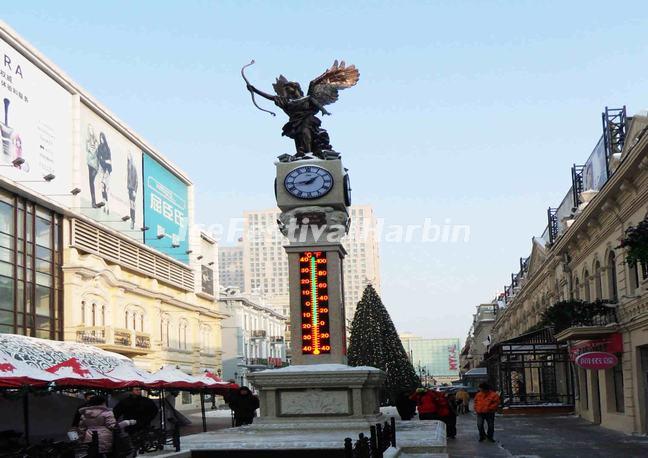
Central Street is home to 71 European-style buildings, including 13 municipal-level protected structures representing Renaissance, Baroque, Eclecticism, and Art Nouveau architectural styles. The present Jiaoyu Bookstore is the largest Baroque building in Harbin and serves as the street's visual anchor. The Mod-Er Hotel (formerly Modern Hotel) and Daoli Qiulin Shop, built in 1906 and 1919 respectively, are fine examples of Art Nouveau architecture. The Fuer Shop (Women and Children's Shop), constructed in 1917, was the former Xiehe Bank and reflects classic Renaissance design. The main street and 23 auxiliary streets together form what is often described as a "museum of architectural art".
A Street Reborn: New Life for a Century-Old Landmark
In 2026, Central Street has undergone a remarkable transformation with nearly 30 new businesses opening along its historic corridors. The street now blends its century-old European heritage with contemporary cultural and commercial vitality.
Among the most notable new arrivals is the Zhu Bingren Bronze Art Museum at No. 192 Central Street—the first Heilongjiang location for this national-level intangible cultural heritage brand, bringing master bronze craftsmanship out of museums and into the street's daily life. The Harbin Sausage Museum (Ou Chang Da Shi), the country's first European sausage-themed museum, houses over 200 historical artifacts and more than 20 varieties of European sausage products, offering a one-stop experience combining exhibition, tasting, and shopping. A Harbin Chocolate Art Museum opened at No. 86 Central Street in June 2026. MINISO FRIENDS, the brand's only top-tier limited store in Northeast China with just 100 locations worldwide, has become a major draw for younger visitors, while Li-Ning's 650-square-meter flagship store seamlessly blends ice-city regional aesthetics with contemporary sports technology.
Central Street is also home to 37 established time-honored brands and intangible cultural heritage commercial entities, including the century-old Ma Di Er (founded 1906, with over 200 million ice pops sold), Qiulin Lidousi red sausage (established 1900), Huamei Western Restaurant, and Lao Chu Jia, which has created a 500-square-meter city culinary culture museum within its 1,800-square-meter flagship store.
Music and Culture Throughout the Year
In September 2026, Central Street released its annual official promotional song "Xiangfeng Laojie" ("Meeting on the Old Street"), following the success of the winter-themed "Laojie de Xue" ("Snow on the Old Street"), which won third prize in the 2026 Harbin Tourism Ambassador Short Video Competition. The street's music corner has been upgraded into a branded performance space with a "free, relaxed, vibrant, and diverse" character, hosting regular themed musical performances that transform street-corner acts into plaza-style music scenes. Throughout 2026, Harbin as a whole has presented over a thousand performances as part of its "City of Music" initiative.
Winter on Central Street
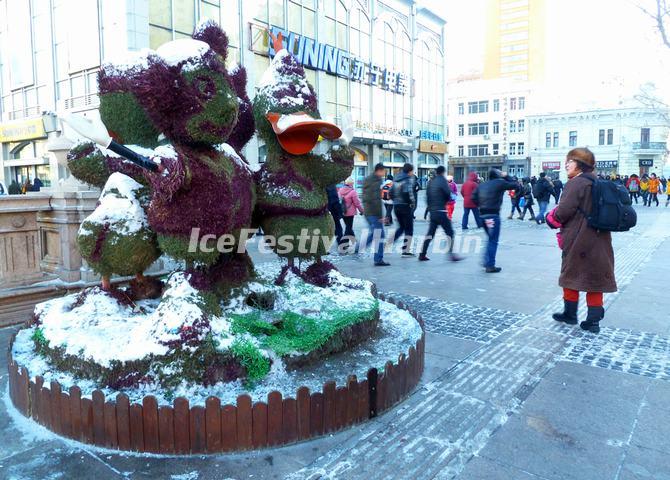
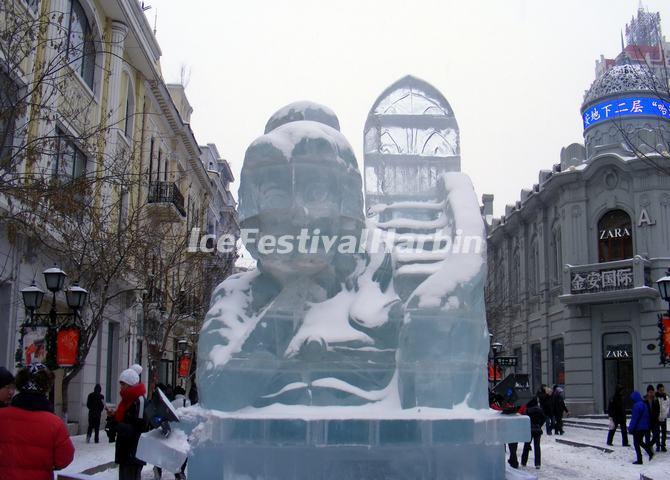
During the ice and snow season, Central Street transforms into a winter wonderland. The 2025–2026 season featured the "Ice and Snow Welcome, Auspicious Horse Greets the New Year" lighting theme, with six core light installations designed by a Harbin Institute of Technology team over 97 days. Highlights included the "Ice and Snow Crown" arched corridor, the "Ice and Snow Forest" with breathing dynamic lighting effects, and the "Magic Color Screen" that projects golden rain, snowflakes, and fireworks onto the street. The beloved ice piano returned, allowing visitors to play "Moscow Nights" on frozen keys from 10 AM to 8 PM daily.
Seventeen ice and snow landscape installations line the street, creating a "one step, one scene" visual experience. For the 2025–2026 winter season, the street management installed the "Four Warm Gifts" in underground passages—anti-slip carpets, warm扶手 covers, snow-scraping mats, and snow-removal shoe brushes—extending from the underground passages to the Parkson Shopping Center, Wanda Plaza, and the Flood Control Monument Plaza. Seven "creative warming stoves" are stationed throughout the street, each with its own theme, offering more than just heat but a warm experience with a story. A "warm bus" service runs every ten minutes from Central Street to major attractions, with heating and mobile QR code payment.
Food and Shopping
Central Street is a culinary destination in its own right. Ma Di Er ice pops (¥5 each) are a must-try even in sub-zero temperatures. Qiulin Lidousi red sausage, freshly sliced and served with garlic, is another local favorite. The street's dining scene has expanded with new immersive restaurants like Tongheju Songpu Yanghang, housed in a Baroque building at No. 120, where guests dine on Northeast Chinese classics like dry-roasted rooster and garlic blood sausage in a space that preserves the building's original elevator and carved staircases. A "Ice and Snow Cultural Creative Market" offers ice-sculpture keychains and Russian nesting dolls at ¥15–30 per item.
Practical Information
-Address: Central Street, Daoli District, Harbin (from Jingwei Street in the south to the Flood Control Monument in the north)
-Opening Hours: Open 24 hours; shops generally operate from 9:00 to 23:00
-Admission: Free
-Getting There: Metro Line 2 to Central Street Station, Exit 1 leads directly to the northern starting point at the Flood Control Monument. Bus routes 2, 12, 15, 23, 29, 64, 89, and 113 also serve Central Street Station
-Nearby Attractions: St. Sophia Cathedral (10-minute walk from the southern section), Flood Control Monument and Stalin Park (northern end), Songhua River waterfront
Central Street is more than a shopping destination—it is a living testament to Harbin's unique position as a crossroads of Chinese and European civilizations. Whether you come for the architecture, the food, the music, or simply to walk on century-old bread stones worn smooth by history, Central Street promises an experience that captures the essence of this remarkable city.

 Zhangjiajie Avatar Tours