
The Heilongjiang Provincial Museum is a National First-Class Museum and a comprehensive museum dedicated to collecting, preserving, researching, and displaying the history, culture, natural resources, and art of Heilongjiang Province. It is located at No. 50 Hongjun Street in Nangang District, Harbin, adjacent to Hongbo Square. In 2006, the museum's main building was designated a Major Historical and Cultural Site Protected at the National Level, and in 2011 it became a AAA-rated national tourist attraction. In 2023, the museum was named one of China's top 100 most-searched museums.
A Baroque Landmark in the Heart of Harbin
The museum's main building is itself a work of architectural art. Constructed between 1906 and 1908, it originally served as the Moscow Mall (莫斯科商场), one of Harbin's earliest department stores, built during the early period of the Chinese Eastern Railway. The building features a distinctive European Baroque style with a beige facade and a dark red domed roof, characterized by flowing curved walls, arched window openings, and a symmetrical zigzag floor plan with three standard sections and two corner connectors. It was designated a Class I Protected Building by the Harbin Municipal Government in 1986. The museum complex consists of the main exhibition building, a collection storage facility, and an office building, with a total floor area of 15,960 square meters. The main building alone covers 11,600 square meters across two above-ground floors and one basement level.
A Century of Institutional History
The museum's origins trace back to the early 20th century, when Russian scholars arrived in Harbin following the opening of the Chinese Eastern Railway and proposed establishing a museum. In 1923, the East Provincial Cultural Relics Research Association, led primarily by Chinese local officials, was founded, and the former Moscow Mall was converted into its exhibition hall. The association's exhibition hall opened to the public on June 12, 1923, marking the beginning of museum development in Heilongjiang Province. The institution underwent numerous name changes over the following decades, including the East Provincial Special District Research Association, the Harbin Local History Museum, and the Songjiang Provincial Museum. In 1954, following the merger of Songjiang Province into Heilongjiang Province, the Heilongjiang Provincial Museum was formally established. In 1962, Guo Moruo, then President of the Chinese Academy of Sciences, inscribed the museum's name in calligraphy.
Collections and Treasures
The museum houses over 620,000 items across four major categories — history, nature, art, and documents — comprising 52 subcategories. Among these are 1,670 sets (12,753 pieces) of National First-Class cultural relics, 3,251 sets (6,725 pieces) of Second-Class relics, and 8,336 sets (14,604 pieces) of Third-Class relics.
The museum's most celebrated treasure is the Jin Dynasty Bronze Seated Dragon (金代铜坐龙), unearthed in 1956 in Acheng District, Harbin, the site of the Jin Dynasty's former capital. Measuring 19.6 centimeters in height and weighing 2.1 kilograms, the bronze dragon features a qilin-like head, a serpentine body, eagle claws, and a curled mane. It sits in a crouched posture with its head slightly raised, mouth open as if roaring, and its left front leg lifted, stepping on a curling cloud. It is the earliest dragon-shaped artifact discovered from Jin Dynasty archaeology and was originally a royal object adorning imperial carriages. The museum also holds several other nationally significant artifacts, including silk fabric clothing excavated from the Jin Dynasty Qi State King's Tomb — known as the "Mawangdui of the North" — which fills a gap in the history of Jin Dynasty costume; the Tang Dynasty Bohai Tianmen Army Seal; the Southern Song Dynasty Sericulture scroll; and the Southern Song Orchid Pavilion Preface scroll.
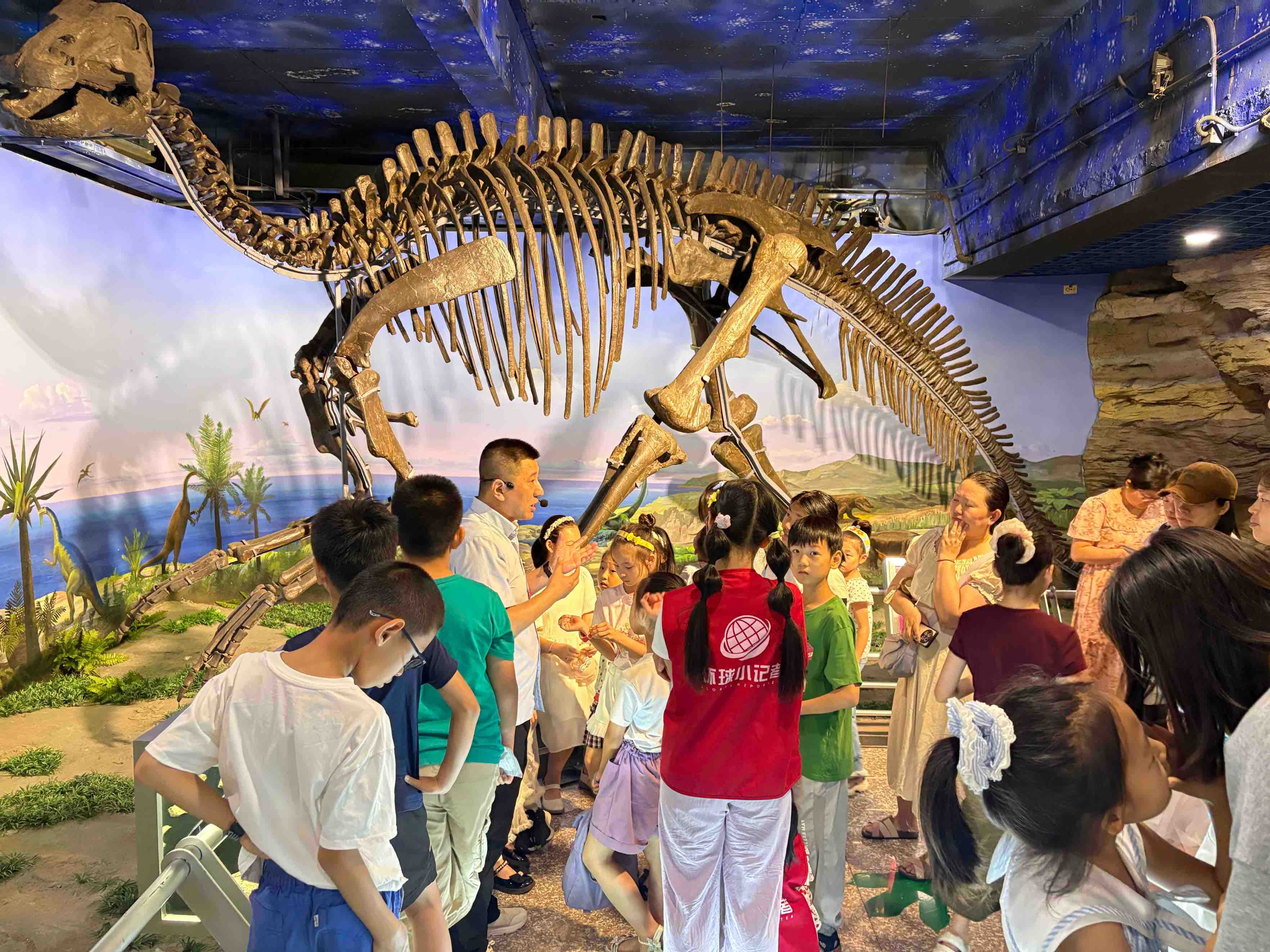
The natural history collection comprises over 130,000 specimens, including the most complete Quaternary woolly rhinoceros skeleton fossil ever discovered in China, a Cretaceous flat-headed duck-billed dinosaur skeleton, China's first complete woolly mammoth skeleton, and a Northeast wild ox skeleton unique to the region. The museum also houses a 1928-mounted Northeast tiger specimen measuring nearly three meters in length. More than 90 species in the collection are Class I or Class II nationally protected animals and rare plants.
The art collection features works by modern Chinese masters including Qi Baishi, Xu Beihong, and Pan Tianshou, as well as calligraphy by Deng Sanmu, one of the museum's longstanding exhibition pillars.
Exhibitions
Following a renovation completed in May 2023, the museum reopened with a refreshed exhibition program. Current and recent exhibitions include "Jade Reflects the Long River" (玉映龙江), a special exhibition of over 280 jade artifacts from the museum's collection, including China's earliest known jade objects from the Xiaonanshan site in Raohe, Heilongjiang, dating back approximately 9,000 years. Other exhibitions include "Harbin Past" (哈尔滨往事), a social life exhibition of Harbin's urban history; "Jade Meets Nanshan" featuring artifacts from the Xiaonanshan site; and "Ice Dance Ink Rhyme," an exhibition of prints. In May 2026, the museum launched a digital display of the Bronze Seated Dragon in the first-floor sunlight hall, using technology to create an immersive viewing experience.
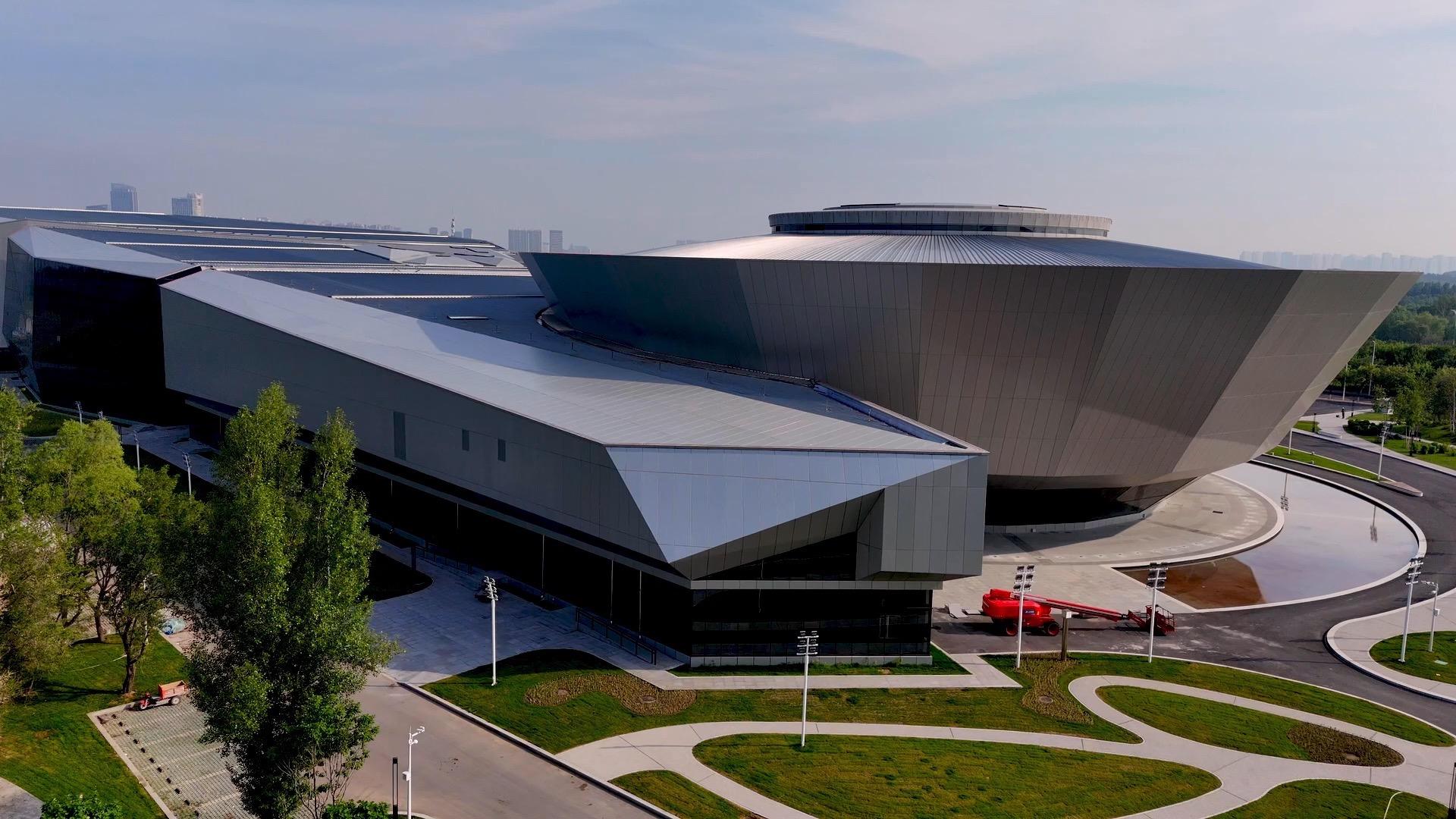
Note that as of 2026, the museum's new building in the Songbei District (Sun Island area) is in the final stages of interior display installation and equipment commissioning, with an anticipated opening date of around September 29, 2026. The original Hongjun Street location has been transitioning its permanent collection to the new site and now primarily hosts special and temporary exhibitions.
 Zhangjiajie Avatar Tours