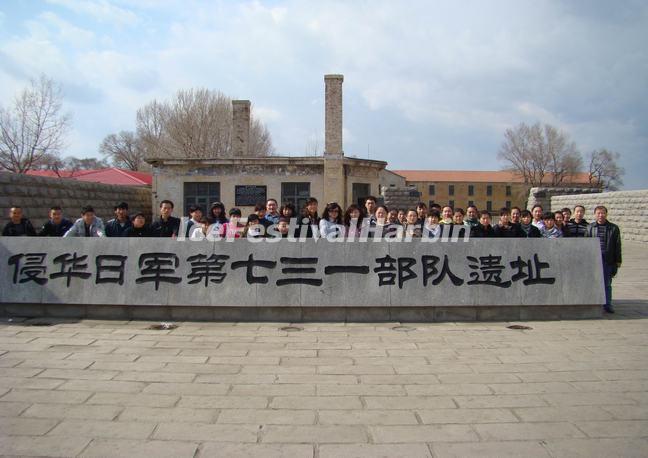
The Exhibition Hall of Crime Evidence of Japanese Army Unit 731 (侵华日军第七三一部队罪证陈列馆), commonly known as the Unit 731 Museum, is a site-type museum located at No. 23 Xinjiang Street in the Pingfang District of Harbin, Heilongjiang Province. Built directly on the former site of Unit 731 — the Japanese Imperial Army's top-secret biological and chemical warfare research base during World War II — the museum serves as a solemn testament to one of the darkest chapters of 20th-century history. It is a National First-Class Museum, a National Patriotism Education Demonstration Base, and a key cultural relic protection unit of China.
Historical Background
Unit 731 was established in 1933 under the guise of a water purification unit, operating under various cover names including the Ishii Unit, the Togo Unit, and the Kwantung Army Epidemic Prevention and Water Supply Department. Between 1939 and 1945, Chinese prisoners of war and civilians — along with Russians, Koreans, Mongolians, and believed American airmen — were subjected to freezing experiments, vivisection, and infection with bubonic plague, syphilis, and other virulent diseases. An estimated 3,000 to 4,000 people died at the facility. The complex included laboratories, a crematorium, a frostbite laboratory, a bacteriological laboratory, and a prison. When Japanese forces retreated in 1945, they destroyed most of the buildings in an attempt to conceal their crimes, leaving behind the ruins visible today.
The Museum and Exhibitions
The museum consists of two main areas: the modern indoor exhibition hall and the outdoor ruins area spanning 250,000 square meters. The new exhibition hall, with a floor area of 9,997 square meters, is organized around a permanent exhibition titled "Crimes Against Humanity — Exhibition of Evidence of Crimes by Unit 731 of the Japanese Imperial Army." The exhibition presents a vast collection of artifacts, historical photographs, archival documents, and equipment used by Unit 731, systematically documenting the unit's biological warfare activities and human experimentation. English captions accompany many exhibits, and audio guides are available for non-Chinese speakers.
In December 2024, the former headquarters building of Unit 731 reopened to the public on China's National Memorial Day. The renewal included the restoration of the "Wall of Victims' Names," featuring 3,000 stone tablets inscribed with the names of those who perished in human experiments and bacterial warfare, arranged along both sides of the central corridor to form a solemn memorial walkway. A special exhibition of precious cultural relics and historical materials related to Japanese bacterial warfare was also launched. In 2025, the museum received over 3,200 donated artifacts and 22,882 pages of archival documents, 1,524 of which were displayed in a special exhibition through March 2026.
The outdoor ruins area preserves the remains of the bacteriological laboratory, frostbite laboratory, crematorium, boiler room, underground gas chamber, and other structures. Walking through these crumbling foundations and silent remnants offers a visceral understanding of the scale and horror of what occurred here.

Visitor Information (2026)
-Address: No. 23 Xinjiang Street, Pingfang District, Harbin (哈尔滨市平房区新疆大街23号)
-Opening Hours: Tuesday to Sunday, 9:00 AM – 5:00 PM. Last entry to the new exhibition hall is 4:00 PM; last entry to the former headquarters site is 4:30 PM. Closed on Mondays (except national holidays). During peak periods such as summer vacation and Spring Festival, hours may be extended to 6:00 PM
-Admission: Free. Advanced reservation is required for Chinese visitors. Non-Chinese visitors may enter by joining the queue with a valid passport, even if the online booking system shows full capacity
-Reservations: Chinese visitors must book 1–7 days in advance through the official WeChat account "侵华日军第七三一部队罪证陈列馆" or the "畅游哈尔滨" mini-program. Tickets are released daily at 8:00 PM. Entry requires the original ID document used for booking
-By Metro: Line 1 to Xinjiang Street Station (新疆大街站), Exit 2, then walk east approximately 300 meters
-By Bus: Routes 343, 348, 338, 371, and others
-Phone: 0451-51747773, 0451-51685222 (available during opening hours)
-Recommended Visit Duration: 2–3 hours
-Etiquette: Maintain a quiet, respectful demeanor. No flash photography inside exhibition halls. Do not laugh or engage in casual conversation in the memorial spaces
Getting There and Nearby
The museum is located in the far south of Harbin's Pingfang District. The most convenient route is Metro Line 1 to Xinjiang Street Station. Note that this is a significant distance from Harbin's central attractions such as Central Street and St. Sophia Cathedral, so plan your visit accordingly. The outdoor ruins area is adjacent to the main exhibition hall and is included in the visit.

 Zhangjiajie Avatar Tours