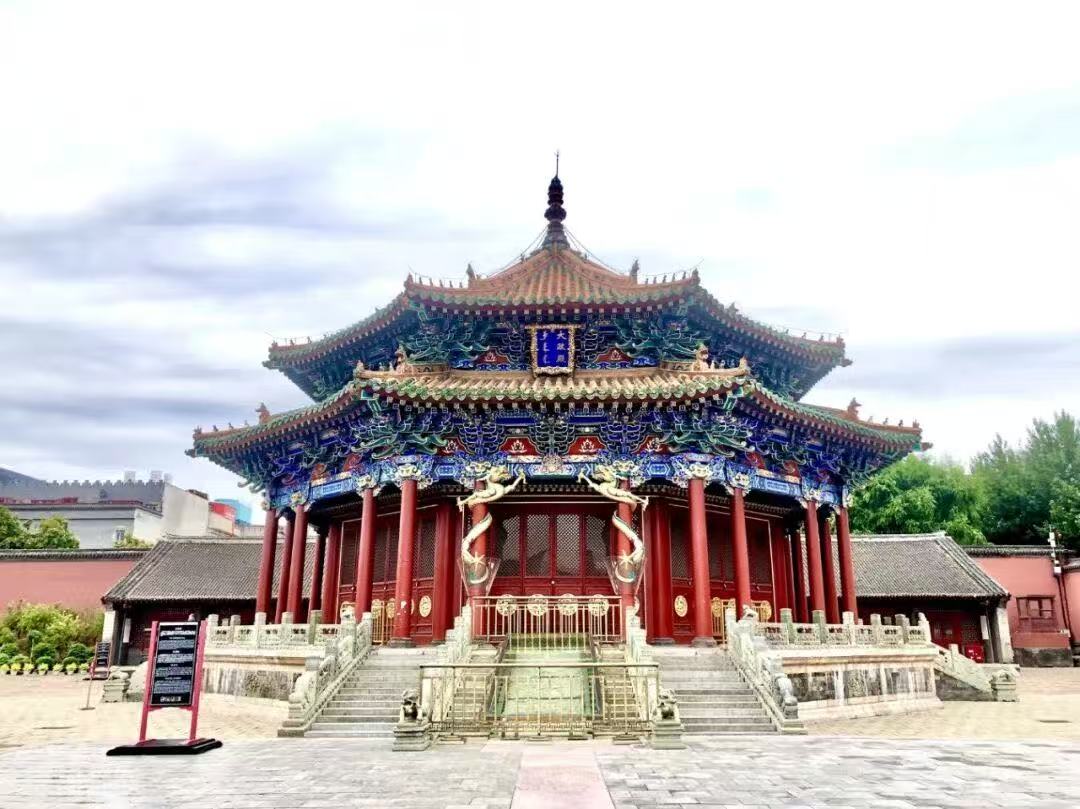
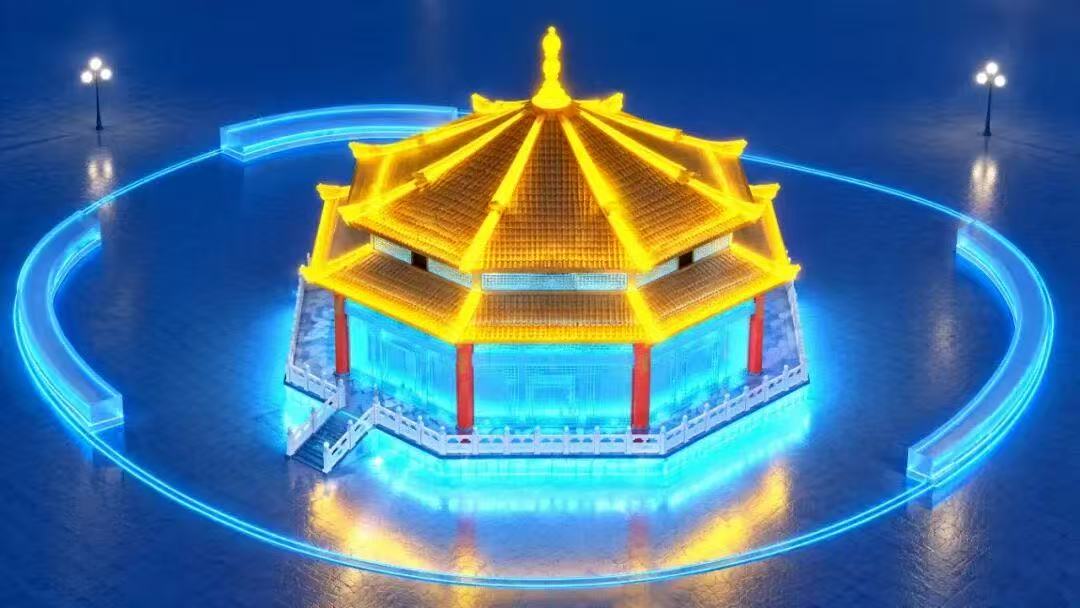
As a landmark of Liaoning, this year’s guest province at the 28th Harbin Ice and Snow World, an ice structure replicating Dazheng Hall of the Shenyang Imperial Palace will be unveiled at the event. A Shengjing landmark carrying the historical memory of the early Qing Dynasty, it will be built with ice as its bones and snow as its clothing, becoming a new photo spot in the park and allowing visitors to experience the historical architecture of Liaoning and Shenyang in one stop in the ice city Harbin.
The Shenyang Imperial Palace was first built in 1625 and is one of the two well-preserved ancient palace complexes in China. Dazheng Hall, commonly known as the Octagonal Hall, was originally named “Da Yamen” and witnessed many major historical events of the early Qing Dynasty: in 1636, Huang Taiji proclaimed himself emperor here and changed the dynastic name to Great Qing; in 1643, Fulin ascended the throne here, and the following year military edicts were issued from this place. It is a landmark of great historical significance.
This year’s Harbin Ice and Snow World has meticulously replicated Dazheng Hall of the Shenyang Imperial Palace. The ice structure fully recreates the octagonal double-eaved pyramidal roof, with a total height of 19.2 meters. Details including the 1.7-meter-high octagonal Sumeru pedestal, balustrades with lotus patterns and vase-shaped balusters, steps on four sides, and the imperial ramp with cloud-and-dragon stone carvings are all rendered in carved ice. The accompanying Ten Princes’ Pavilions are arranged in the “tent-palace” layout of the Eight Banners system, splayed in a V shape on both sides of the main hall, faithfully reproducing the ancient architectural layout.
It is understood that the Dazheng Hall ice sculpture is a key landscape of this year’s guest province and will be exhibited alongside ice structures of domestic and international landmarks such as Chillon Castle in Switzerland, Impression West Lake in Hangzhou, and Tengwang Pavilion in Nanchang. As visitors stroll through the park, they can examine the architectural details of the ice sculpture by day; when the lights come on at night, the ice hall glows brilliantly and creates a highly atmospheric scene, allowing visitors to check in at distinctive landscapes from multiple places in a single day.
This year’s Harbin Ice and Snow World continues to promote cross-regional cultural and tourism integration, bringing historical landmarks from outside the province into the ice and snow park and using ice sculpture art to connect the cultural heritage of different regions, enabling visitors to experience the charm of diverse regional cultures amid Harbin’s ice and snow feast.

 Zhangjiajie Avatar Tours